AI Hotel Operations: The Value Is No Longer in Answering Guests, but in Coordinating the Team
Jurin AI unveiled an agent that connects reservations, concierge, housekeeping and maintenance on top of a hotel's PMS, while Resorts World Sentosa launched an "AI brain" with Microsoft. What was announced, which figures are estimates, and five steps to bring AI into your hotel operations.
 BySebastián RondónCEO y fundador de KMS Agency Group
For years, the conversation about artificial intelligence in hospitality revolved around one question: can AI answer the guest? That question is now largely settled. The one that is starting to matter is different: can AI help the hotel team work together better?
Two announcements this week point exactly in that direction. On November 26, 2026, Japanese company Jurin AI unveiled an AI agent for hotels and resorts that connects reservations, guest service, and housekeeping and maintenance work. A day earlier, on November 25, Resorts World Sentosa in Singapore launched its SYMBIOSIS AI Living Lab, committing S$5 million over two years and partnering with Microsoft to build a shared "AI brain."
At KMS Agency, we read both stories as a clear signal: AI hotel operations are moving beyond a chatbot on the website and becoming a system that links what the guest asks for with what the team actually does.
What Jurin AI announced
According to the press release published on PR TIMES and AI.info's fact-checked coverage, Jurin AI's agent goes beyond answering questions. It is designed to work with the reservation and property management systems (PMS) a hotel already uses, and to support the full process: from the guest's request, to the instruction sent to the right staff member, to a record of how it was handled.
The company describes three areas:
1. Reservations
The agent takes bookings by phone, email and chat, checks availability, registers reservations in the existing PMS, and handles changes and cancellations. As an indication of impact, Jurin AI estimates a reduction of about 3,900 hours a month in phone and chat work, plus the automation of roughly 840 hours a month of post-call processing.
2. Guest concierge
It responds 24/7, 365 days a year, in 105 languages, through in-room phones, LINE, WhatsApp and a web chat opened with a QR code. It can understand several requests in a single message, such as "two towels, breakfast for two and a taxi to the airport," and route each one to the right department. The company also estimates that explaining hotel facilities at check-in could take less than half the usual time.
3. Support for floor staff
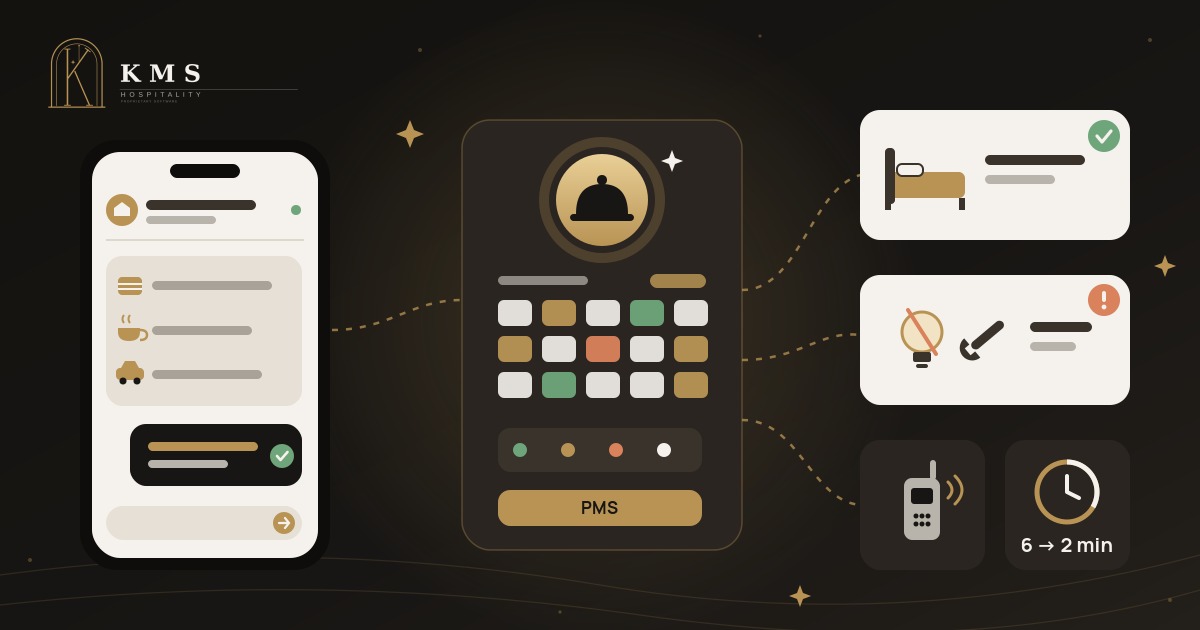
This, in our view, is the most interesting part. The agent adjusts cleaning priorities based on guest arrivals and tells the nearest staff member their next task via intercom or smartphone. If a housekeeper reports "the room is clean, but the light doesn't work," the system separates the two: it updates the room status in the PMS and sends an inspection request to maintenance. It can also guide new employees using the hotel's approved work manuals.
For this area, the company cites cutting communication and record-keeping from 6 to 2 minutes per case, halving maintenance response time, and eliminating after-the-fact manual entry of completed cleanings and equipment issues into the PMS.
One important caveat: all of these figures are the company's own reference estimates, not audited results from a named hotel. Jurin AI also notes that each deployment is designed around the property's procedures and that integration scope depends on the available APIs and access permissions.
What Resorts World Sentosa is doing
The Singapore case is very different in scale, but the underlying idea is the same. According to Lianhe Zaobao, RWS has more than 8,000 employees and welcomed 17 million visitors last year. Its AI lab is backed by the Infocomm Media Development Authority (IMDA) and the Singapore Tourism Board (STB), and Microsoft has pledged up to US$1.5 million in expertise, training and technology.
The "AI brain" they will build together is a shared digital platform that integrates AI applications, enterprise systems and technology solutions. At Equarius Hotel, robots are already being trialled to carry room supplies from back-of-house storage to guest floors overnight. The hotel's assistant housekeeping supervisor put it simply: with floors already stocked when the shift starts, the team has more time to prepare and inspect rooms and attend to guests.
Tan Kiat How, Singapore's Senior Minister of State who launched the initiative, named the real problem: robots, buildings and enterprise systems often can't talk to each other. That is why the goal is shared platforms rather than isolated solutions.
What this tells us about AI hotel operations
A 15-room boutique hotel has no robots and no multimillion-dollar budget. But the underlying pattern applies at any size:
- The bottleneck isn't the answer, it's the coordination. A guest who asks for towels on WhatsApp gets a reply in seconds, but if nobody passes it on to housekeeping, the service still fails.
- Fragmented information costs minutes on every request. When reservations, front desk, housekeeping and maintenance live in separate tools, each request means calling, searching and retyping.
- AI performs when it runs on the hotel's real data. Neither announcement describes a standalone AI. Both stress connecting the agent to the PMS, manuals and existing processes.
Five steps to get started at your property
1. Map how a single request travels. Pick a frequent one (towels, late checkout, a broken fixture) and note who receives it, where it goes and where it gets logged. That is where the lost minutes are. 2. Centralize information before you automate. Reservations, room status, tasks and guest data should live in one system. Without that, any AI agent is working blind. 3. Separate what the agent resolves from what it assigns. Answering breakfast hours is automatic; a maintenance task needs an owner and a closed loop. 4. Write down your procedures. Approved manuals are what allow AI to guide new staff without improvising. 5. Measure in minutes and closed cases. Guest response time, maintenance resolution time and tasks logged without manual entry are better indicators than the number of messages answered.
If you want the revenue side of the story, we've covered how AI sales assistants for hotels turn a timely answer into a direct booking and what AI agents can do for hotels and tourism.
The bottom line
The news from Japan and Singapore doesn't say hotels should replace their teams. It says the opposite: AI adds value when it frees people from calling, searching and retyping, so they can spend that time with guests. AI hotel operations start with something far less flashy than a robot: having reservations, rooms, tasks and conversations in one place.
At KMS Hospitality, we build all-in-one software for hotels: reservations, front desk, operations, direct sales and guest service in a single system, with an AI agent working inside that same information. If you want your team to spend less time coordinating and more time with guests, discover KMS Hospitality.